
Client:
The Kalāt-e Nāderi project was initiated with the goal of digitally showcasing the historical, artistic, and cultural heritage of this region. The client’s vision was to create an innovative platform that blends technology and culture—allowing users to explore Iran’s ancient legacy through an immersive and interactive experience.
Problem:
Despite its rich historical and cultural value, Kalāt-e Nāderi remained largely inaccessible to the general public. Physical distance and the lack of engaging tools made it difficult for people to discover its treasures.
The main challenge was to make this heritage accessible beyond physical boundaries—to create a digital experience that brings history out of museums and into people’s everyday lives.
Process:
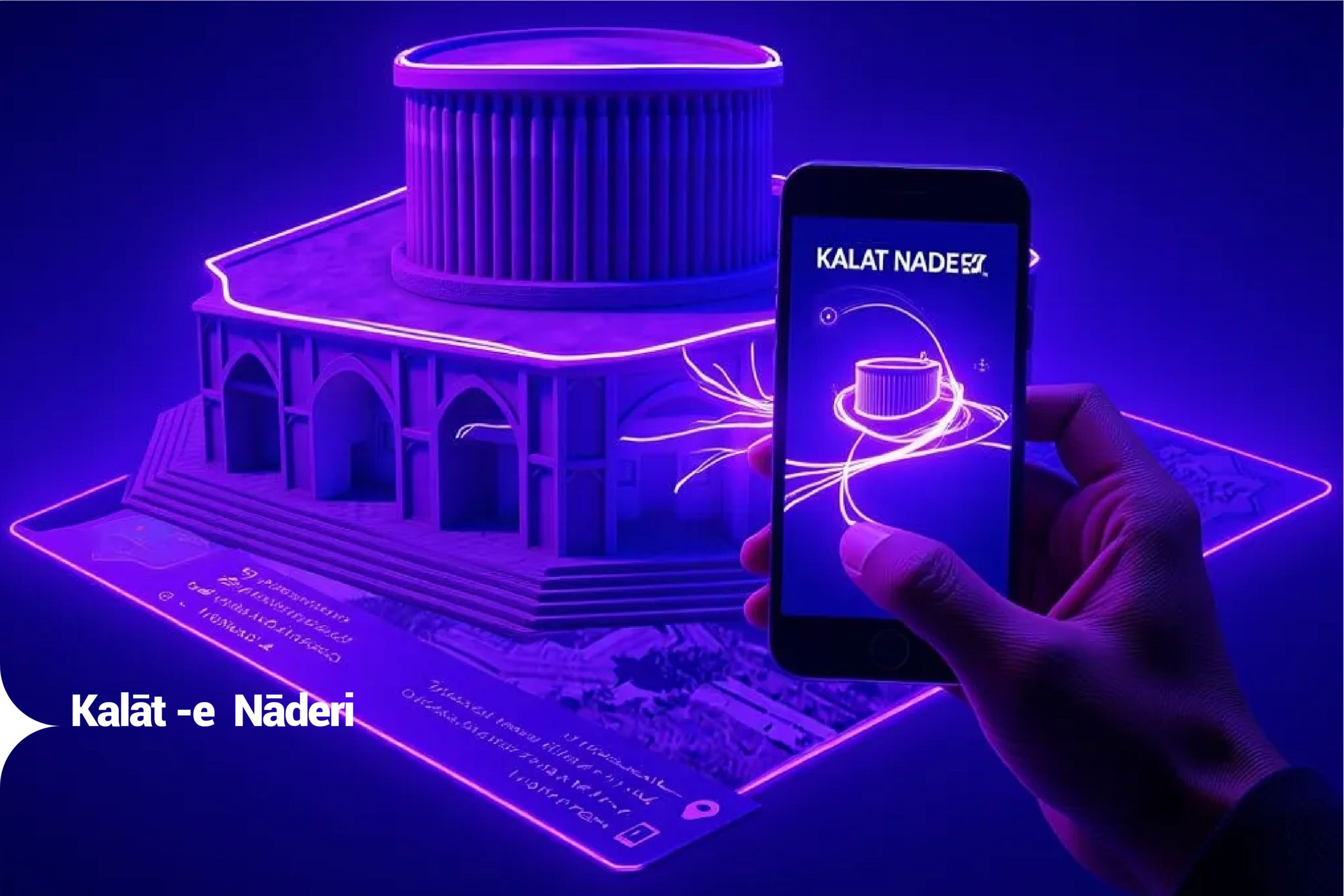
The development process began with user research and the exploration of augmented reality (AR) technologies. Historical artifacts and artworks were digitally reconstructed into interactive 3D models, allowing users to visualize them in real-world environments through their mobile cameras.
Additional features were developed to connect nearby museums, galleries, and digital events, forming an integrated cultural ecosystem around Kalāt-e Nāderi.
A clean and intuitive user interface, cross-device optimization, and multiple rounds of field testing ensured a smooth and engaging user experience.
Solution:
The result was an AR-powered application that brings the treasures of Kalāt-e Nāderi directly into users’ homes.
By combining augmented reality with historical storytelling, the app provides an immersive cultural tourism experience—where users can point their camera at a building or landmark and instantly see detailed 3D reconstructions and contextual information.
This application not only serves as a digital gateway to historical discovery but also acts as a bridge between the past and the present, and between travelers and Iran’s cultural heritage.